Real-time AI Video Drives Q1 ATHs

Messari's State of Livepeer Q1 2026 Report, by Senior Research Analyst Jake Koch-Gallup, marks a milestone for Livepeer: the network reached all-time highs in both usage and fee generation, while AI inference remained the largest driver of protocol revenue.
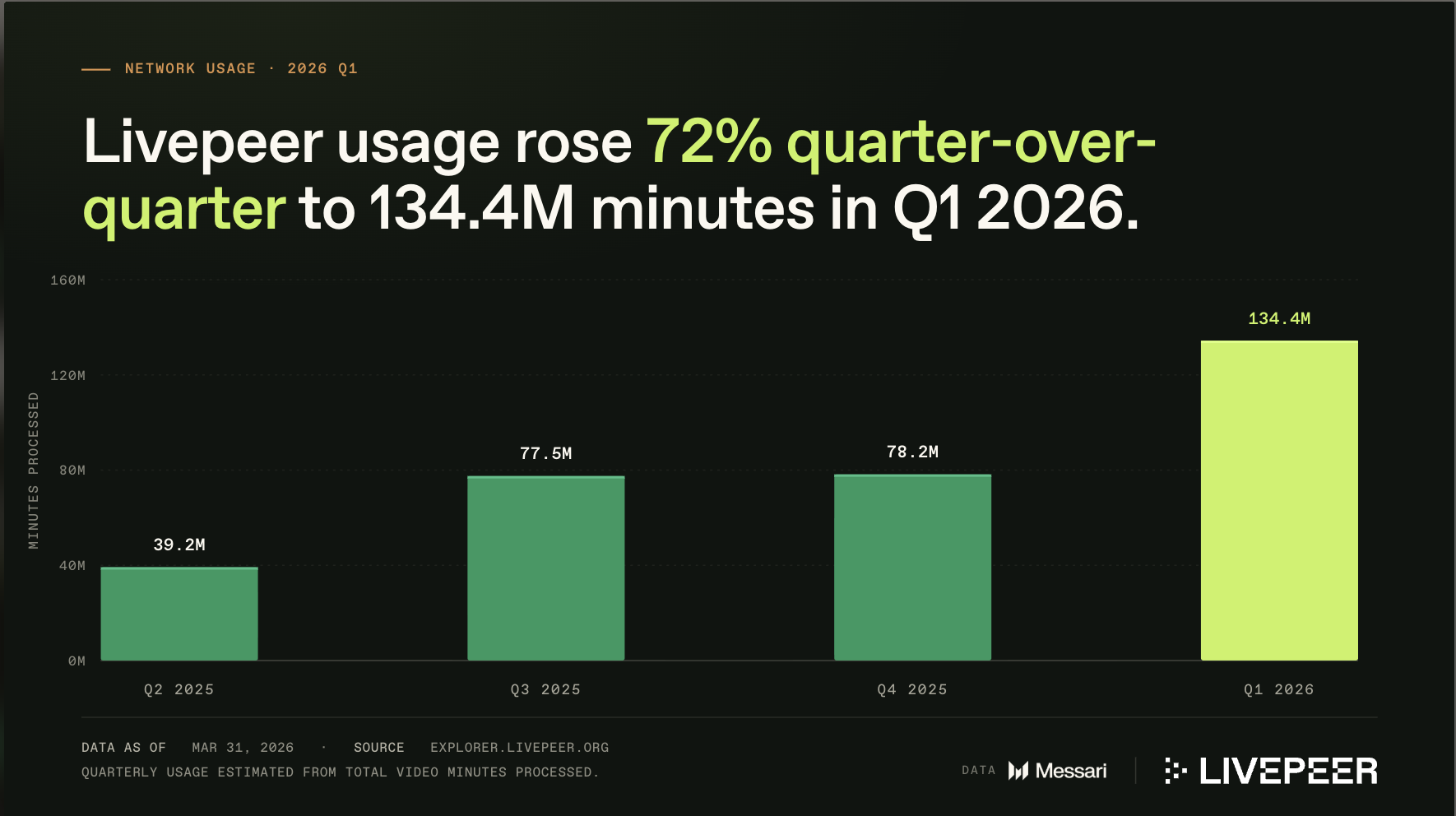
Livepeer processed 134.4 million minutes in Q1, up 71.9% quarter over quarter. This reflects deeper production usage across existing applications and builders, with demand increasingly concentrated in real-time AI and agent-related workloads.
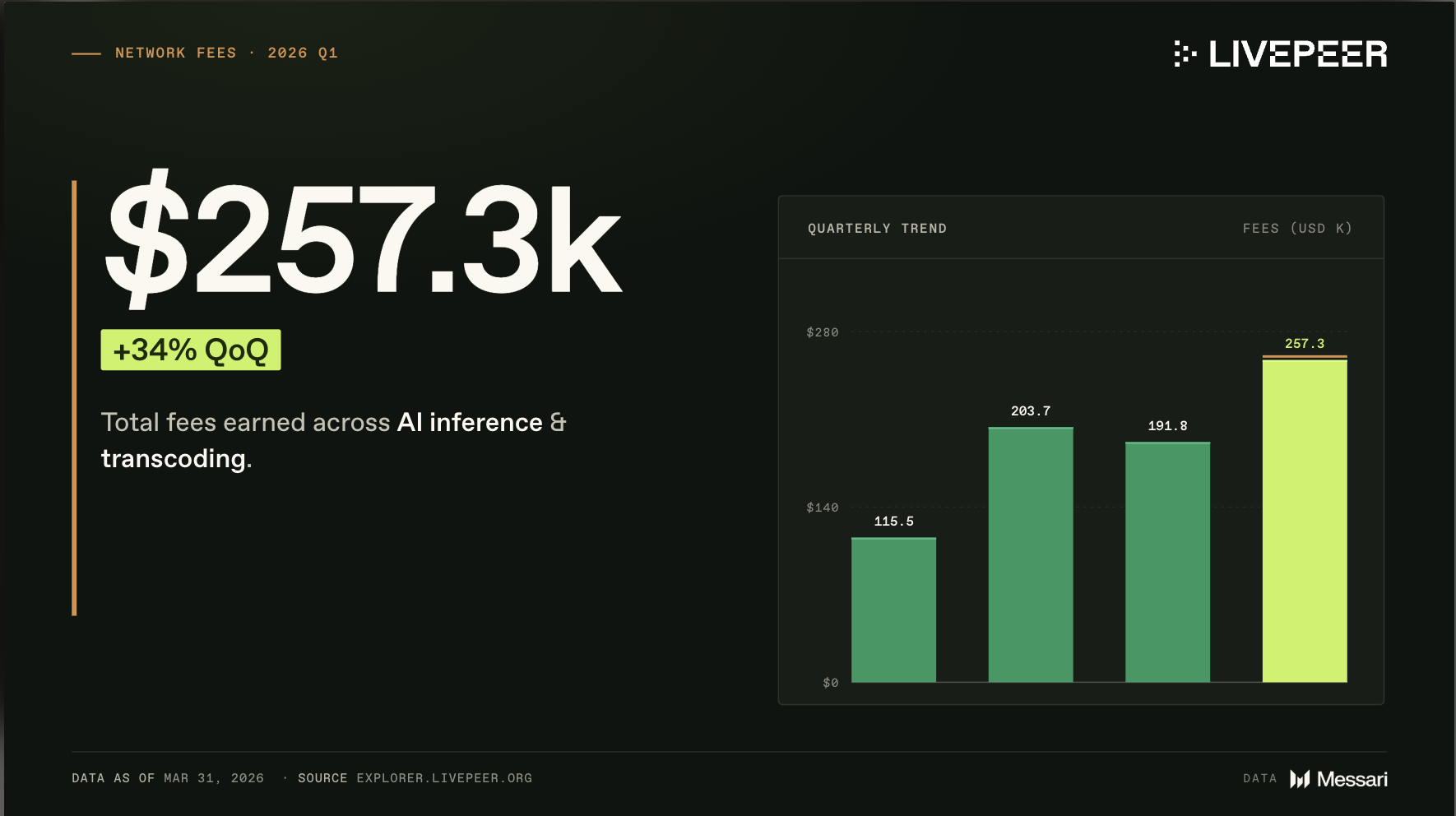
Fees moved with that usage. Demand-side fees increased 34.2% quarter over quarter to $257,300, also an all-time high. Average cost for processing 1,000 minutes declined as throughput scaled faster than fee capture, suggesting the network is becoming more cost-efficient for end users as activity grows.
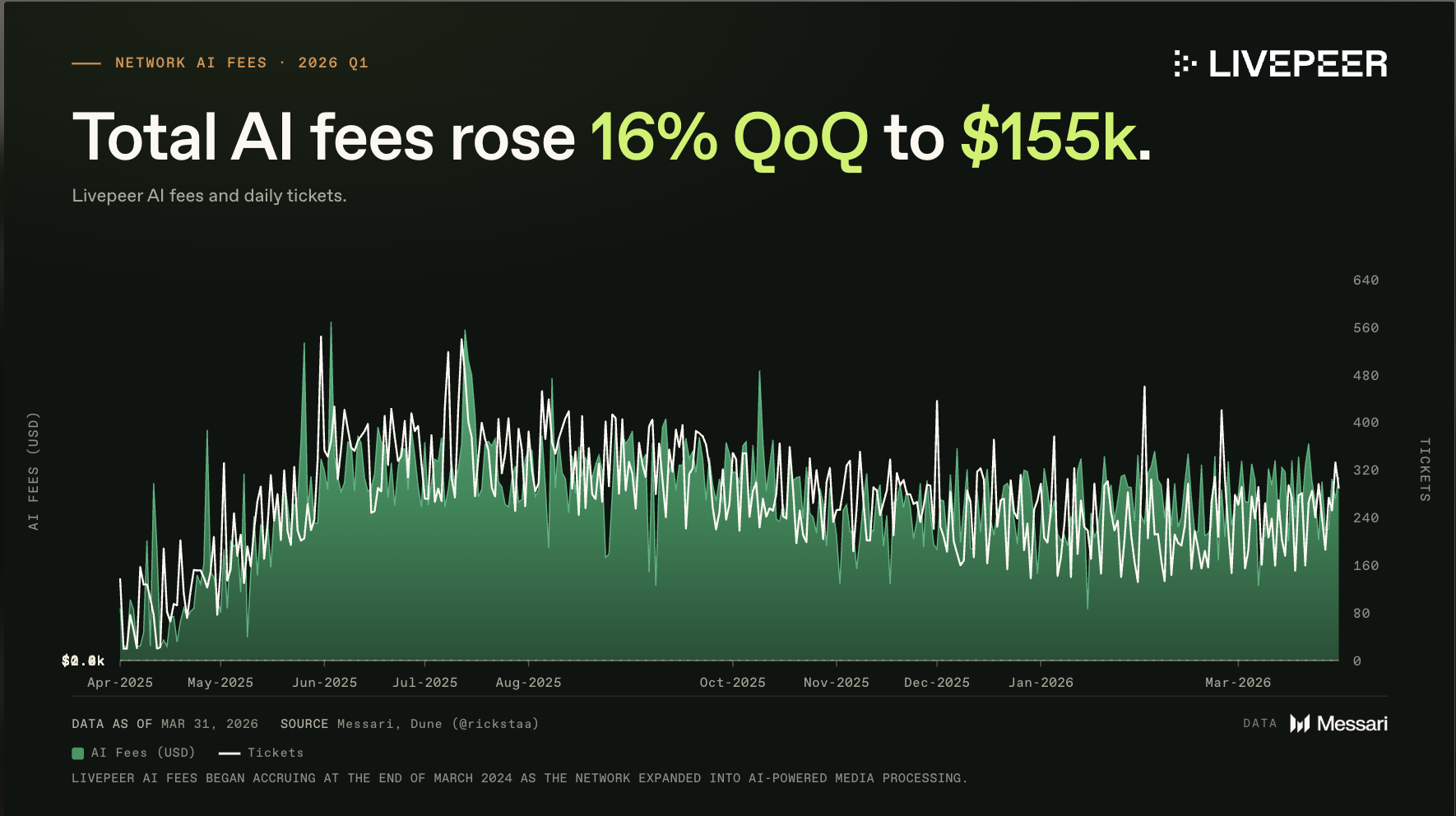
AI-driven fees reached $154,700 in Q1, up 15.5% quarter over quarter, and accounted for roughly 60% of total protocol revenue. AI inference is not a side experiment on Livepeer anymore. It is the network's largest monetization driver. We expect transcoding fees to decline over time as the workload continues toward AI-focused video generation.
End-user applications need real-time AI infrastructure that can generate, transform, and deliver video as it's being produced. Developers need low-latency GPU compute for inference, live transformation, interactive overlays, agent avatars, and other AI-native video experiences.
Livepeer was built for real-time video processing. The same architecture that supported live streaming and transcoding now gives the network a path toward real-time AI inference: open access, decentralized GPU supply, and media compute that can scale with application demand.
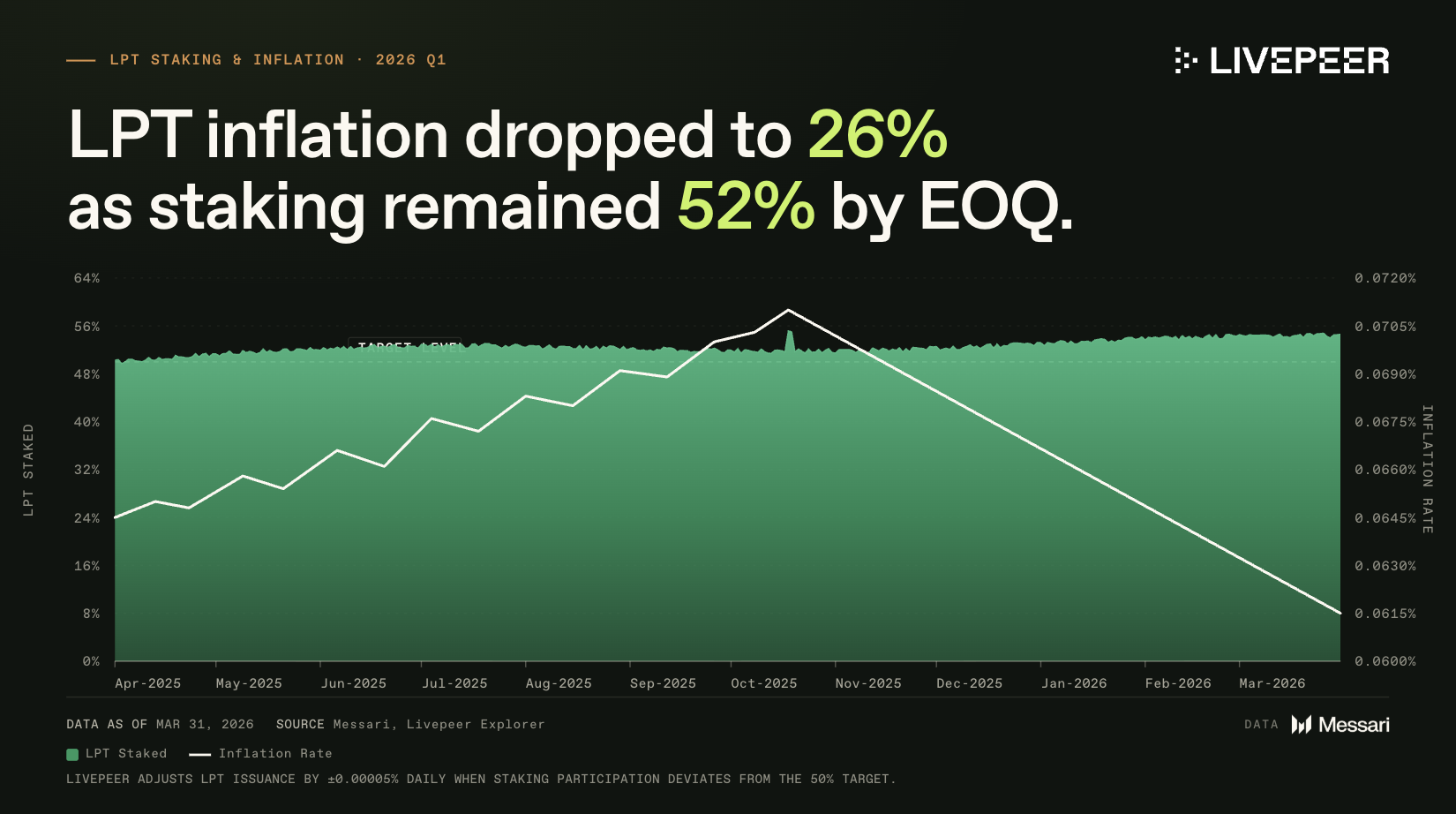
On the supply side, staking participation remained above the 50% target throughout the quarter. This contributed to lower issuance and a continued downward inflation trend, with annualized daily inflation declining to 26.2%.
Q1 also showed the ecosystem moving from raw infrastructure toward application-ready workflows. Real-time video engine Daydream ran a multi-week AI Video Program with creative technologists building generative AI experiences for live streams. Network operators integrated bring-your-own-container (BYOC) capabilities to support custom AI pipelines. Embody and related agent-avatar work moved closer to production paths, connecting speech, prompts, and model outputs into responsive characters.
With Q1 as Livepeer's strongest quarter on record, the Foundation's priority is to carry the momentum forward. We're shortening the path for independent developers to put their first inference job on the open network, and expanding the number of builders bringing real-time AI video applications to market.
Read Messari's complete State of Livepeer Q1 2026 Report.